Fire safety in commercial buildings is not optional. It is a legal requirement, a moral responsibility, and frankly, common sense. Yet many business owners still treat fire extinguishers like decorative wall art. They hang one up, hope for the best, and move on.
That approach fails when a real fire starts.
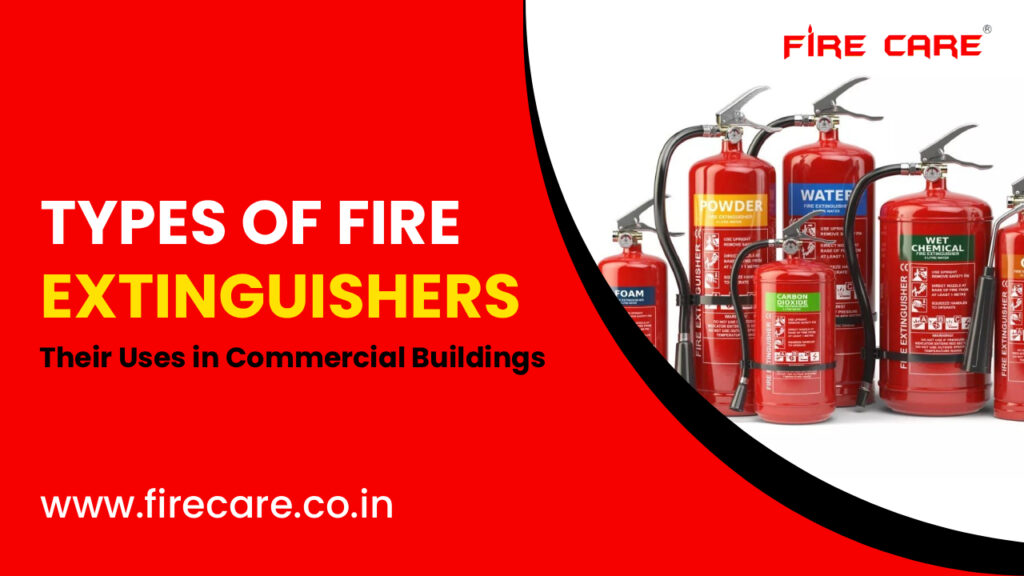
Different fires need different solutions. Using the wrong fire extinguisher can make a small fire worse, faster. This guide explains the types of fire extinguishers, how they work, and where each one should be used in commercial buildings.
We will keep it practical, accurate, and easy to understand. No scare tactics. Just facts and logic.
Why Fire Extinguisher Knowledge Matters in Commercial Spaces
Commercial buildings face higher fire risks than homes. Electrical systems run longer. Kitchens operate at high heat. Machinery works nonstop. People come and go.
According to the National Fire Protection Association (NFPA), non-residential structure fires cause billions in property damage globally every year. Many of these fires could be controlled early with the correct extinguisher.
A fire extinguisher works best in the first 30 to 60 seconds of a fire. After that, evacuation becomes the priority.
Knowing which extinguisher to use is not advanced training. It is basic fire safety literacy.
Understanding Fire Classes Before Choosing an Extinguisher
Fire extinguishers are classified based on the type of fire they can safely put out. These classifications follow global standards from organizations like NFPA, OSHA, and ISO.
Class A Fires
Involve ordinary combustible materials:
- Wood
- Paper
- Cloth
- Rubber
- Plastics
Common in offices, schools, and retail spaces.
Class B Fires
Involve flammable liquids:
- Petrol
- Diesel
- Oil
- Paint
- Solvents
Common in garages, warehouses, and industrial units.
Class C Fires
Involve energized electrical equipment:
- Computers
- Servers
- Wiring
- Control panels
Very common in modern commercial buildings.
Class D Fires
Involve combustible metals:
- Magnesium
- Sodium
- Potassium
Mostly found in specialized industrial facilities.
Class K Fires
Involve cooking oils and fats:
- Deep fryers
- Commercial kitchens
Critical for restaurants and food courts.
Water Fire Extinguishers (Class A)
How They Work
Water extinguishers cool burning materials below their ignition point. Simple physics. No mystery.
Where They Are Used
- Offices
- Schools
- Retail stores
- Paper storage areas
Where They Should Never Be Used
- Electrical rooms
- Kitchens with oil or grease
- Fuel storage areas
Water conducts electricity. Using it on live electrical equipment can turn a fire emergency into a medical one.
Trusted source: NFPA Fire Extinguisher Guide
Foam Fire Extinguishers (Class A and B)
How They Work
Foam forms a blanket over the fire. It cuts off oxygen and prevents re-ignition. Think of it as a fire suffocation tactic.
Ideal Locations in Commercial Buildings
- Car parks
- Warehouses
- Fuel storage areas
- Factories
Limitations
Foam should not be used on live electrical equipment unless stated otherwise by the manufacturer.
Foam extinguishers balance effectiveness and safety, which makes them popular in mixed-risk environments.
Trusted source: UK Fire Safety Guidance, HSE
Dry Powder Fire Extinguishers (Class A, B, C)
How They Work
Dry powder interrupts the chemical reaction of fire. It does not cool the fire. It stops it from continuing.
Best Use Cases
- Industrial plants
- Boiler rooms
- Mechanical areas
- External fire risks
The Big Drawback
Dry powder creates a thick cloud. It reduces visibility and damages electronics. It leaves a mess that nobody enjoys cleaning.
Because of this, many commercial offices avoid dry powder indoors.
It works well, but it is not polite.
Trusted source: OSHA Fire Protection Standards
Carbon Dioxide (CO₂) Fire Extinguishers (Class B and C)
How They Work
CO₂ displaces oxygen around the fire. No oxygen, no fire. Simple and effective.
Perfect for:
- Server rooms
- Electrical panels
- Computer labs
- Control rooms
Why Businesses Love CO₂
- No residue
- No equipment damage
- Clean discharge
Important Safety Note
CO₂ reduces oxygen in the air. In small enclosed rooms, it can cause breathing issues. Training matters here.
Trusted source: NFPA 10 Standard for Portable Fire Extinguishers
Wet Chemical Fire Extinguishers (Class K)
Designed Specifically For
- Commercial kitchens
- Restaurants
- Hotels
- Cafeterias
How They Work
Wet chemical extinguishers cool the fire and create a soap-like layer over hot oil. This process, called saponification, prevents re-ignition.
Why Water Fails in Kitchens
Water causes burning oil to splash and spread fire instantly. This is why kitchen fires escalate so fast.
Wet chemical extinguishers stop that chaos.
Trusted source: NFPA Commercial Cooking Fire Safety
Clean Agent Fire Extinguishers (Class A, B, C)
What Makes Them Different
Clean agents like FM-200 or Novec 1230 extinguish fires without leaving residue. They are safe for sensitive equipment and people.
Common Locations
- Data centers
- Medical facilities
- Museums
- Financial institutions
They cost more, but they protect assets that cost much more.
Trusted source: NFPA Clean Agent Fire Extinguishing Systems
Matching Fire Extinguishers to Commercial Building Areas
Using one extinguisher type for an entire building is risky. Smart fire safety uses zoned placement.
Offices
- Water or Foam for Class A fires
- CO₂ near electrical equipment
Server Rooms
- CO₂ or Clean Agent only
Commercial Kitchens
- Wet Chemical mandatory
- Fire blanket as backup
Warehouses
- Foam or Dry Powder depending on stored materials
Parking Areas
- Foam or Dry Powder
Fire risk assessment decides placement, not guesswork.
Legal and Compliance Considerations
Most countries follow fire safety laws aligned with NFPA, OSHA, or local fire authorities.
Typical requirements include:
- Correct extinguisher type
- Proper signage
- Annual servicing
- Staff training
Ignoring these rules leads to fines, insurance issues, and serious liability.
Fire safety documentation often matters as much as equipment.
Common Mistakes Businesses Make
Let us call these out clearly.
- Installing the cheapest extinguisher everywhere
- Blocking extinguisher access
- Skipping annual inspections
- Training nobody
- Using expired extinguishers
Fire safety fails when responsibility gets ignored.
Training Employees Matters More Than You Think
An extinguisher works only if people know how to use it.
Most safety professionals recommend the PASS method:
- Pull the pin
- Aim at the base
- Squeeze the handle
- Sweep side to side
Training takes minutes. Damage prevention saves millions.
Final Thoughts
Fire extinguishers do not prevent fires. They control them before things spiral out of control.
Choosing the right types of fire extinguishers for commercial buildings protects people, assets, and operations. It also builds trust with insurers, regulators, and employees.
Fire safety is not about fear. It is about preparation.
And preparation always beats regret.
Frequently Asked Questions
Which fire extinguisher is best for commercial buildings?
There is no single best option. Commercial buildings require different fire extinguishers based on fire risks. Offices usually need water or foam extinguishers, while server rooms require CO₂ or clean agent extinguishers. Kitchens must use wet chemical extinguishers.
Can one fire extinguisher type be used for all fires?
No. Using the wrong fire extinguisher can make a fire worse. For example, water should never be used on electrical or oil fires. Fire extinguishers must match the fire class.
How often should fire extinguishers be serviced in commercial buildings?
Most fire safety authorities, including NFPA and OSHA, recommend inspection at least once a year. Some environments require more frequent checks based on risk levels.
Are fire extinguishers mandatory in commercial buildings?
Yes. Most local fire safety laws require commercial buildings to install appropriate fire extinguishers, maintain them, and train staff in basic usage.
Where should fire extinguishers be placed in offices?
Fire extinguishers should be easily accessible, clearly visible, and placed near exits or high-risk areas such as electrical panels and storage rooms.
Real Also: Why Fire Safety Is Mandatory for Commercial and Industrial Buildings