Many people use the terms fire engine and fire truck interchangeably, but they are not the same. While both vehicles play a vital role in firefighting and emergency response, they are designed for different purposes and carry different equipment. If you’ve ever wondered which vehicle carries water, which one has the aerial ladder, or why American fire departments use both, you’re in the right place. In this guide, I’ll explain the difference between a fire engine and a fire truck in simple terms while helping you understand the role of American fire engines in modern fire protection.
When most people see a large red emergency vehicle speeding through traffic with flashing lights and a loud siren, they simply call it a “fire truck.” However, firefighters know there is a clear distinction between a fire engineand a fire truck. Understanding this difference is important for anyone interested in fire safety, emergency services, or purchasing specialized firefighting vehicles.
Whether you manage an industrial facility, work in municipal fire services, or simply want to learn more about modern firefighting equipment, understanding these vehicles will help you appreciate how emergency response works.
What Is a Fire Engine?
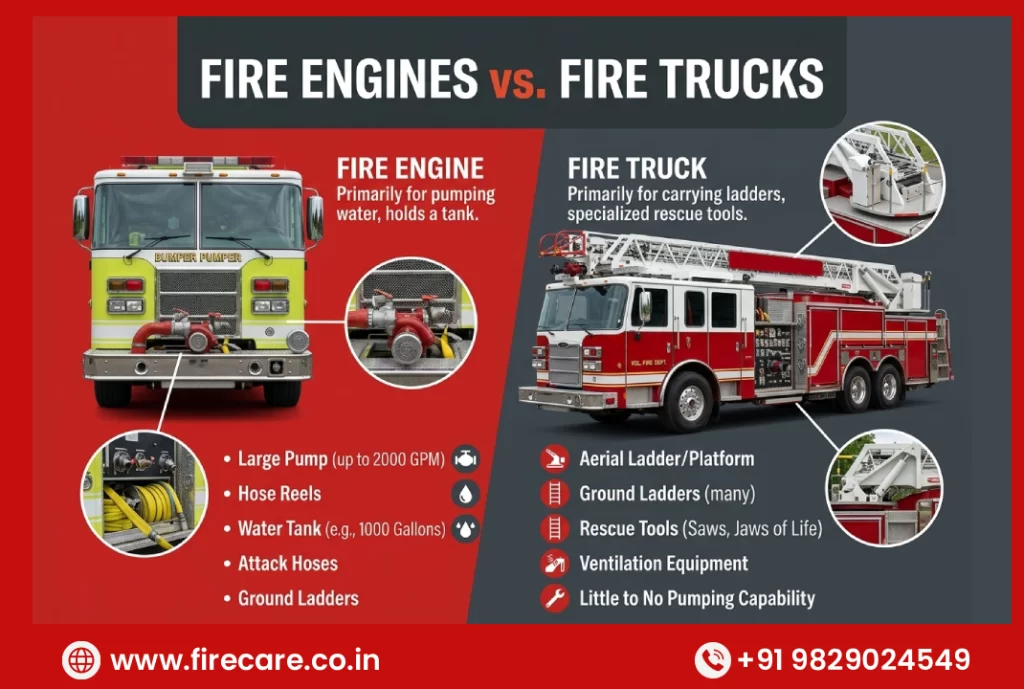
A fire engine, also called a pumper engine, is the backbone of most firefighting operations. Its primary job is to fight fires by delivering water and essential firefighting equipment to the scene.
Unlike other emergency vehicles, a fire engine carries its own water supply and a powerful pump that allows firefighters to attack a fire immediately, even before connecting to a nearby fire hydrant.
What Does an American Fire Engine Carry?
Modern American fire engines are equipped with a wide range of firefighting tools, including:
- Water tank
- High-pressure fire pump
- Fire hoses
- Hose reels
- Nozzles
- Portable fire extinguishers
- Ground ladders
- Self-contained breathing apparatus (SCBA)
- Basic rescue tools
- Medical first-aid equipment
These components allow firefighters to respond quickly to structural fires, vehicle fires, and other emergencies.
How Does a Fire Engine Work?
The heart of every fire engine is its pump system.
When firefighters arrive at an incident, the pump draws water either from the onboard water tank or from an external source, such as a fire hydrant, reservoir, or tanker. The pump then delivers water through high-pressure hoses directly onto the fire.
This rapid response helps control fires during the critical first few minutes, when every second counts.
Common Uses of American Fire Engines
American fire engines respond to a wide range of emergencies, including:
- Residential fires
- Commercial building fires
- Vehicle fires
- Electrical fires
- Industrial incidents
- Small rescue operations
Because of their versatility, fire engines are often the first emergency vehicles dispatched to fire-related incidents.
What Is a Fire Truck?
A fire truck serves a different purpose. Instead of focusing on water delivery, it provides specialized equipment for rescue operations, ventilation, and access to difficult locations.
Most fire trucks do not carry a large onboard water tank like a fire engine. Instead, they support firefighting crews with equipment that helps them reach people trapped in high-rise buildings or confined spaces.
What Does a Fire Truck Carry?
Depending on its design, a fire truck may include:
- Aerial ladder
- Hydraulic platform
- Ground ladders
- Ventilation equipment
- Hydraulic rescue tools
- Chainsaws
- Lighting systems
- Search and rescue equipment
- Rope rescue gear
These vehicles focus more on rescue and operational support than direct fire suppression.
When Is a Fire Truck Used?
Fire trucks are commonly dispatched for:
- High-rise building fires
- Technical rescue operations
- Building ventilation
- Roof access
- Rescue from elevated locations
- Large commercial fires
For example, if firefighters need to rescue occupants from the tenth floor of a burning building, the aerial ladder on a fire truck becomes essential.
Types of Fire Trucks
Some of the most common fire trucks include:
- Aerial Ladder Truck
- Tower Ladder Truck
- Rescue Truck
- Heavy Rescue Vehicle
- Quint Truck (combines engine and ladder functions)
Each type is designed to support firefighters during specific emergency situations.
What Is the Difference Between a Fire Engine and a Fire Truck?
This is one of the most searched questions about firefighting vehicles, and the answer is surprisingly simple.
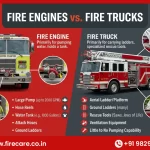
A fire engine fights the fire, while a fire truck supports the firefighters.
The fire engine carries water, pumps, and hoses needed to suppress fires. The fire truck provides ladders, rescue equipment, and specialized tools for accessing buildings and assisting rescue operations.
Fire Engine vs. Fire Truck Comparison
| Feature | Fire Engine | Fire Truck |
| Primary Role | Fire Suppression | Rescue & Support |
| Water Tank | ✔ Yes | ✘ Usually No |
| Fire Pump | ✔ Yes | ✘ Usually No |
| Fire Hoses | ✔ Yes | Limited |
| Aerial Ladder | ✘ No | ✔ Yes |
| Rescue Equipment | Basic | Advanced |
| Main Purpose | Extinguish Fires | Rescue & Access |
| Common Deployment | Residential & Commercial Fires | High-Rise & Rescue Incidents |
Which One Responds First?
In most emergency situations, the American fire engine arrives first because it carries everything needed to begin extinguishing the fire immediately.
The fire truck follows when additional rescue equipment, aerial access, or ventilation is required.
Working together, these vehicles allow firefighters to manage emergencies safely and efficiently.
Why Do Fire Departments Use Both?
Large emergencies often require multiple specialized vehicles.
For example:
- The fire engine supplies water and attacks the flames.
- The fire truck rescues trapped occupants using its aerial ladder.
- Rescue personnel use hydraulic tools from the truck if victims are trapped inside vehicles or buildings.
Each vehicle complements the other, ensuring a faster and more effective emergency response.
What Types of American Fire Engines Are Used Today?
Not every emergency requires the same type of firefighting vehicle. A house fire, an airport emergency, and a forest fire all demand different equipment. That is why American fire departments use several types of American fire engines, each designed for a specific purpose.
Understanding these vehicles helps businesses, municipalities, and industries choose the right firefighting solution.
Pumper Fire Engine
The Pumper Fire Engine is the most common fire engine used across the United States.
It carries:
- Water tank
- High-pressure pump
- Fire hoses
- Portable ladders
- Fire extinguishers
- Basic rescue equipment
Pumper engines usually respond first because they can begin firefighting immediately after arriving at the scene.
Best Used For
- Residential fires
- Commercial buildings
- Schools
- Hospitals
- Shopping malls
Rescue Pumper
A Rescue Pumper combines the features of a traditional fire engine with additional rescue equipment.
Besides firefighting tools, it carries:
- Hydraulic rescue tools
- Medical equipment
- Breathing apparatus
- Traffic accident rescue kits
This vehicle is ideal for departments that frequently respond to both fires and road accidents.
Wildland Fire Engine
Wildland fire engines are specifically designed for grassland and forest fires.
Unlike urban fire engines, they feature:
- Four-wheel drive
- Off-road capability
- Compact body
- High ground clearance
These vehicles help firefighters reach remote locations where larger trucks cannot operate.
Airport Rescue and Fire Fighting (ARFF) Vehicle
Airports require specialized fire engines capable of handling aircraft emergencies.
ARFF vehicles include:
- Large water tanks
- Foam systems
- Dry chemical agents
- High-capacity pumps
Their primary objective is to rescue passengers and control fuel fires quickly.
Industrial Fire Engine
Large manufacturing plants, oil refineries, chemical facilities, and warehouses often require customized fire engines.
Industrial fire engines may include:
- Foam monitors
- Water cannons
- High-capacity pumps
- Specialized suppression systems
These vehicles protect facilities with higher fire risks than standard commercial buildings.
What Types of American Fire Trucks Are Available?
Just as fire engines have different configurations, fire trucks also vary depending on rescue requirements.
Their primary focus remains rescue operations, aerial access, and firefighter support.
Aerial Ladder Truck
This is probably the fire truck most people recognize.
Its telescopic ladder allows firefighters to:
- Rescue people trapped on upper floors
- Ventilate roofs
- Spray water from elevated positions
Some aerial ladders extend beyond 100 feet, making them invaluable for high-rise emergencies.
Tower Ladder Truck
Instead of a standard ladder, these trucks use a platform or bucket.
Advantages include:
- Improved firefighter safety
- Better stability
- Easier victim rescue
- Increased operational flexibility
Tower ladders are commonly used in large cities with tall buildings.
Heavy Rescue Truck
Heavy rescue trucks carry specialized rescue equipment instead of water.
Typical equipment includes:
- Hydraulic cutters
- Spreaders
- Air lifting bags
- Rope rescue systems
- Technical rescue tools
These trucks respond to:
- Road accidents
- Building collapses
- Industrial incidents
- Disaster response
Quint Fire Truck
The word “Quint” stands for five functions.
A Quint vehicle combines:
- Fire pump
- Water tank
- Fire hoses
- Ground ladders
- Aerial ladder
It offers the versatility of both a fire engine and a fire truck, making it an excellent choice for departments with limited vehicle fleets.
Why Are American Fire Engines Considered Among the Best in the World?
American fire apparatus manufacturers have spent decades improving safety, reliability, and operational performance.
Modern American fire engines include advanced technology that helps firefighters respond faster and work more safely.
Advanced Pump Systems
Modern pump systems deliver large volumes of water with consistent pressure, allowing firefighters to control fires more efficiently.
High-Strength Vehicle Chassis
Manufacturers design these vehicles to operate under extreme conditions while carrying thousands of kilograms of equipment.
Smart Safety Features
Many new American fire engines include:
- Electronic stability control
- Thermal imaging cameras
- GPS navigation
- Pump automation
- Digital communication systems
- LED emergency lighting
These technologies improve firefighter safety while reducing response times.
Superior Customization
Different communities face different risks.
American manufacturers customize vehicles based on:
- Population density
- Industrial hazards
- Airport operations
- Wildland fire risks
- Municipal requirements
This flexibility makes American fire engines suitable for nearly every firefighting scenario.
How Can FireCare Help You Choose the Right Firefighting Vehicle?
Selecting a firefighting vehicle involves much more than comparing specifications.
Every organization has different operational requirements.
At FireCare, I believe the right solution starts with understanding the environment you want to protect.
Whether you need:
- A municipal fire engine
- An industrial fire tender
- An airport rescue vehicle
- A rescue fire truck
- A customized firefighting solution
choosing equipment that matches your operational risks is essential.
Beyond supplying firefighting equipment, I recommend considering factors such as:
- Water capacity
- Pump performance
- Foam system compatibility
- Rescue equipment
- Maintenance requirements
- Operator training
- Long-term service support
Investing in the right firefighting vehicle today can significantly improve emergency preparedness tomorrow.
What Should You Consider Before Buying a Fire Engine or Fire Truck?
Purchasing a firefighting vehicle represents a significant investment.
Before making a decision, evaluate the following factors:
Purpose
Will the vehicle be used for:
- Municipal firefighting?
- Industrial protection?
- Airport operations?
- Rescue missions?
Water Capacity
Choose a water tank size that aligns with your operational requirements.
Pump Performance
Ensure the pump delivers sufficient pressure and flow rate for expected emergencies.
Rescue Equipment
If rescue operations are common, prioritize vehicles with advanced rescue tools.
Maintenance Support
Reliable after-sales service reduces downtime and extends vehicle lifespan.
Conclusion
Understanding the difference between a fire engine and a fire truck is more than just learning the correct terminology. It helps you appreciate how modern firefighting works and why emergency services rely on different vehicles for different tasks.
Frequently Asked Questions (FAQs)
What is the difference between a fire engine and a fire truck?
A fire engine carries water, pumps, and hoses to extinguish fires, while a fire truck carries ladders, rescue equipment, and specialized tools to support firefighting and rescue operations.
Why are American fire engines different from other fire engines?
American fire engines are known for their larger water tanks, high-capacity pumps, advanced technology, and customizable designs that support a wide range of emergency response scenarios.
Which vehicle arrives first during a fire emergency?
In most cases, the fire engine arrives first because it carries the equipment needed to begin firefighting immediately. Fire trucks usually follow to provide rescue support and aerial access.
Do fire trucks carry water?
Most traditional fire trucks do not carry large onboard water tanks. Their primary role is rescue, ventilation, and firefighter support rather than direct fire suppression.
What equipment does an American fire engine carry?
A typical American fire engine carries a water tank, fire pump, hoses, nozzles, portable ladders, breathing apparatus, fire extinguishers, medical kits, and basic rescue equipment.
What is a pumper fire engine?
A pumper fire engine is the most common firefighting vehicle. It transports firefighters, water, pumps, and hoses, allowing crews to begin firefighting immediately after arriving at the scene.
What is an aerial ladder truck?
An aerial ladder truck is a fire truck equipped with a long hydraulic ladder that helps firefighters rescue people from tall buildings, ventilate roofs, and fight fires from elevated positions.
Which firefighting vehicle is best for industrial facilities?
Industrial facilities often require customized fire engines or fire tenders equipped with foam systems, high-capacity pumps, and specialized suppression equipment to handle high-risk environments.
How long does a fire engine typically last?
With proper maintenance, a fire engine can remain operational for 15–25 years or longer, depending on usage, servicing, and departmental policies.
What should I consider before buying a firefighting vehicle?
Consider the vehicle’s intended use, water capacity, pump performance, rescue equipment, maintenance support, customization options, and compliance with applicable fire safety standards.
Are American fire engines used outside the United States?
Yes. Many countries and industrial organizations use American-designed fire engines because of their reliability, advanced technology, and customization capabilities.
Why is regular maintenance important for fire engines?
Routine maintenance ensures pumps, hoses, ladders, engines, and safety systems remain fully operational, helping firefighters respond effectively during emergencies.
Information Source:
National Fire Protection Association (NFPA)
U.S. Fire Administration (USFA)
National Institute of Standards and Technology (NIST) Fire Research