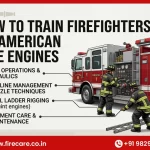
Training firefighters to operate American fire engines is one of the most demanding, high-stakes educational challenges in any profession. Think about it, you’re not just teaching someone to drive a big truck. You’re preparing them to manage thousands of gallons of pressurized water, navigate congested city streets at speed, and deploy lifesaving equipment under conditions of extreme stress, physical danger, and time pressure. The margin for error is essentially zero. A poorly trained pump operator at a residential house fire isn’t just ineffective, they can be deadly. That’s why the fire service in the United States has developed some of the most structured, comprehensive, and rigorous training frameworks in the world, and why understanding how to properly train firefighters on American fire engines is so critically important for fire departments of every size.
According to the National Fire Protection Association (NFPA), there were an estimated 1,018,000 firefighters in the U.S. in 2023, with 37 percent being characterized as career firefighters and 63 percent labeled as volunteers. That’s an enormous training pipeline that fire departments, academies, and training officers across the country must continuously feed. Whether you’re running a busy urban department in Chicago or a rural volunteer company in Montana, the principles of training firefighters on your engine remain largely the same: start with standards, build skills progressively, drill relentlessly, and never stop learning.
Understanding the American Fire Engine
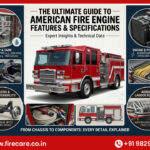
Before you can train anyone to operate a piece of fire apparatus, you need to have an intimate understanding of what that apparatus actually is. American fire engines — sometimes called pumpers — are purpose-built vehicles designed to deliver water, foam, and other fire suppression agents to a fire scene. They are not generic trucks. They are precision machines with complex hydraulic systems, specialized hose configurations, pump panels, water tanks, and an enormous array of tools and equipment that must all be understood, accessed, and operated efficiently under the most chaotic conditions imaginable.
Types of Fire Engines Used in the U.S.
American fire departments commonly operate several types of engine apparatus, and training programs must be tailored to whichever type the department deploys. The most common is the Class A pumper, a standard engine capable of pumping at least 750 gallons per minute (GPM) from a pressurized water source and at least 500 GPM in draft mode. Many departments also operate tanker/tender apparatus designed to transport large volumes of water to rural fires where hydrant systems are sparse or nonexistent. Rescue engines combine traditional pumper capability with heavy rescue equipment, making them especially common in urban settings where car accidents and structural collapses demand versatility.
Wildland engines — lighter and more maneuverable — are critical in the American West and Southwest, where interface fires demand off-road access. Each of these apparatus types carries unique operational characteristics, and a truly well-trained firefighter should have foundational knowledge of all of them, even if their primary assignment is on a single type of engine.
Key Components Every Firefighter Must Know
Fire apparatus training covers topics such as fire apparatus construction, inspection and maintenance, fire pump theory, various systems of pumping apparatus, transfer valve, pressure control devices, primers and drafting principles, fire streams and hydraulic calculation, and water supply and private protection systems. That’s a dense list, and it barely scratches the surface. Beyond those systems, firefighters must also develop fluency with the pump panel — the control center of the fire engine where intake and discharge pressures are managed, valves are opened and closed, and water flow is directed to individual hose lines. They must understand the water tank (typically between 500 and 1,000 gallons on most American engines), the onboard foam system, the pre-connected attack lines, and the array of nozzles, fittings, adaptors, and hand tools stored throughout the apparatus. Mastery of these components is not optional — it is the bare minimum required to operate safely on a fireground.
Regulatory Standards Governing Fire Engine Training
NFPA 1001 and NFPA 1002 Explained
If there’s one thing that separates American fire training from a haphazard approach, it’s the standards framework. The fire service in the United States operates under a robust system of professional qualifications codified primarily by the National Fire Protection Association. The NFPA 1002 standard identifies the minimum job performance requirements (JPRs) for career and volunteer firefighters and fire brigade personnel who drive and operate fire apparatus.
This standard is the bible for fire apparatus driver/operator training across the country, and any serious training program must be built around its requirements. NFPA 1001, on the other hand, governs the professional qualifications for firefighters generally — covering everything from basic rescue operations to fire behavior, hazmat awareness, and self-contained breathing apparatus (SCBA) use. Together, these two standards create a comprehensive baseline that ensures firefighters across the country — whether they’re from Los Angeles or rural Vermont — have met proven, validated minimum competencies before they’re allowed to operate an engine at an emergency scene.
State-Level Training Requirements
While NFPA standards provide the national floor, individual states often impose additional requirements on top of them, which training officers must navigate carefully. For example, California’s Office of the State Fire Marshal uses NFPA 1002 as the foundation for its Fire Apparatus Driver/Operator – Pumping Apparatus Certification, with qualifications documented in the Fire Apparatus Driver/Operator CTS Guide. Oregon, Nebraska, and virtually every other state have similar certifying bodies that may add unique requirements around driving evaluations, pump competency testing, and minimum practice hours. The practical implication for training officers is that your program must not only satisfy NFPA minimums but also stay continuously current with your state’s evolving requirements. Ignoring those state-specific layers can result in firefighters who are technically NFPA-compliant but not legally certified to operate apparatus in their jurisdiction — a frustrating and costly oversight that competent training programs actively work to avoid.
Building the Foundation — Fire Academy Training
Physical Conditioning and Mental Preparation
You simply cannot train someone to operate a fire engine effectively if they are not physically and mentally ready to function under extreme stress. The fire academy is where that foundation gets built, and it is deliberately demanding. The academy teaches more than skills — it builds character. Recruits learn to trust each other, communicate clearly, and perform under stress. These habits carry into every shift as full-time firefighters.
Physical training at the academy level typically includes daily physical fitness regimens, timed drills that push recruits to operate heavy equipment while fatigued, and confidence courses that simulate the disorienting sensory environment of a working fire scene. The mental conditioning is equally important — recruits must learn to stay calm when everything around them is loud, hot, unpredictable, and potentially lethal. Instructors use timed evolutions, competing distractions, and scenario variations specifically to break recruits out of a comfortable, routine mindset and push them toward adaptive, problem-solving thinking. This mental toughness is what allows a firefighter to step up to the pump panel at 2 a.m. at a fully involved structure fire and execute correctly.
Classroom Instruction and Theoretical Knowledge
Hands-on training is the headline, but the classroom is where the cognitive architecture gets built. Before a recruit ever touches a pump panel on a real apparatus, they need to understand the underlying hydraulic principles that govern how water behaves under pressure in a hose system.
They need to grasp friction loss calculations, understand how elevation affects pump pressure, know the difference between static and residual pressure at a hydrant, and be able to mentally troubleshoot a water supply problem on the fly. Good firefighter training requires expertise in a wide variety of skills, including the proper use of personal protective equipment (PPE), the appropriate use of ropes, and recognizing how and when to communicate with partners and leaders before, during, and after an incident. Classroom sessions should be interactive and scenario-driven rather than passive lectures — instructors who rely solely on PowerPoint slides and textbook reading are leaving enormous instructional value on the table.
Role-playing incident command scenarios, discussing case studies from real-world fire incidents, and working through hydraulic math problems as a team are all far more effective than passive listening, and they produce recruits who understand not just what to do but why it works.
Hands-On Engine Company Operations Training
Pump Operations and Hydraulic Calculations
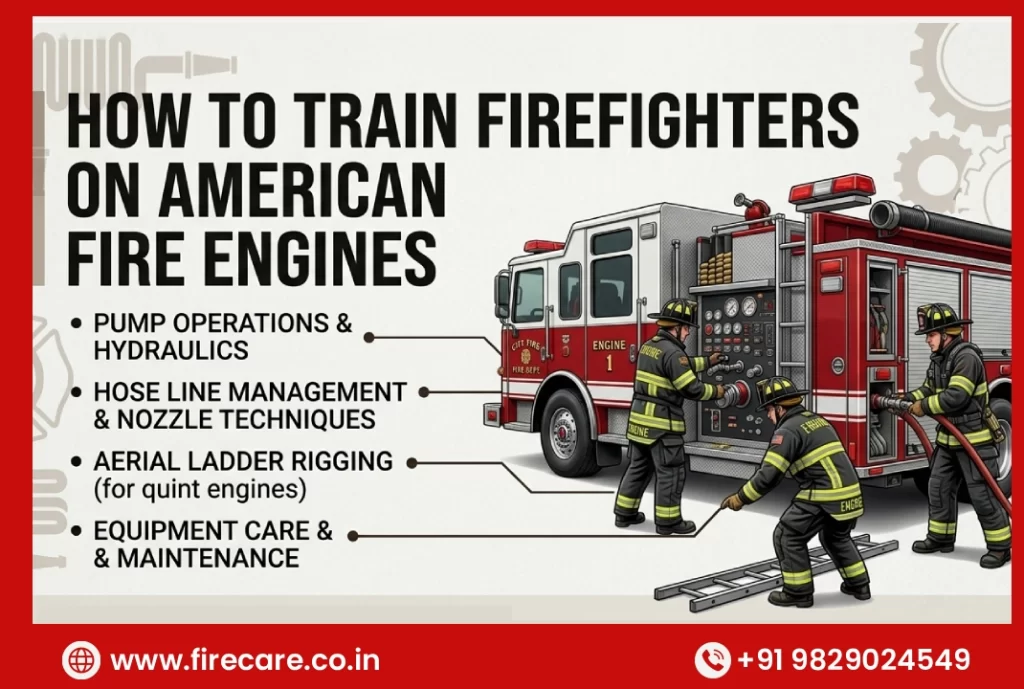
Operating the pump panel on an American fire engine is one of the most technically demanding skills in the entire fire service. The driver/operator — often called the pump operator or chauffeur — is responsible for supplying the correct amount of water at the correct pressure to every attack line deployed from the engine, simultaneously, without interruption, throughout the duration of the incident. That is an enormous responsibility. Discharge pressures affect the desired nozzle operating pressure, nozzle reaction, RPM on apparatus, hose maneuverability, and kinks. Testing your equipment and narrowing down the limitations and features of your own equipment is important given the wide variety of options that are out there now.
Training programs should require pump operators to build and work from custom pump reference charts based on their department’s specific hose and nozzle combinations — because no two departments’ equipment is identical, and a pump chart built for a different agency’s gear is worse than useless in a real emergency. Trainees should practice priming the pump, transitioning from tank water to hydrant supply, calculating friction loss for multiple simultaneous hose lines, and managing pressure surges and drops caused by firefighters advancing hose, climbing stairs, or encountering kinks. These skills must become automatic — not something a pump operator has to consciously reason through at a burning building.
Hose Deployment and Hydrant Connection Drills
If pump operations are the brain of engine company training, hose deployment drills are the muscle. The ability to rapidly and correctly lay out attack lines, connect to hydrants, and establish water supply is one of the most time-critical skills in firefighting. Every minute of delay in establishing a water supply translates directly into more fire damage — and potentially more lives lost. Training programs must drill firefighters repeatedly on forward lays (engine runs from the hydrant toward the fire), reverse lays (engine runs from the fire back to the hydrant), and split lays that divide responsibilities between multiple apparatus.
Exercises should include connecting large-diameter hose (LDH) to hydrant outlets, using gated wyes and intake manifolds to accept multiple supply lines, and comparing setup times and residual pressures across different hydrant configurations. Firefighters should be timed and graded on these evolutions, not to create unnecessary pressure but to instill the urgency and precision that real fireground operations demand. Hydrant connection drills should be conducted in all weather conditions — because fires don’t wait for ideal circumstances, and a frozen hydrant connection fumbled by cold hands costs lives.
Apparatus Driving and Maneuvering Skills
Driving a fire engine is nothing like driving a personal vehicle, and training officers must resist the temptation to underestimate the skill required. A fully loaded Type 1 pumper can weigh over 40,000 pounds, carry a significant center of gravity, and have turning radii that can easily destroy property or injure bystanders if misjudged. NFPA 1002 requires that driver/operators be able to drive and maneuver a fire apparatus in a confined space, restricted/diminished clearance, serpentine and non-emergency and emergency vehicle operations.
Training courses should include formal driving circuits that require recruits to navigate the apparatus through cones representing tight urban intersections, back into simulated fire stations and loading zones, and execute serpentine patterns that test spatial awareness and weight management. Emergency vehicle operations training — often called EVOC — must also be included to teach recruits how to safely operate under lights and sirens, including proper intersection clearing protocols, speed management, and situational awareness. It’s worth noting that fire apparatus crashes remain one of the leading causes of firefighter line-of-duty deaths, making driving competency not just a certification checkbox but a genuine life-or-death skill.
Scenario-Based and Live Fire Training
Simulated Fireground Evolutions
One of the most powerful tools in fire engine training is the scenario-based evolution — a structured training exercise that places firefighters in a realistic, dynamic incident simulation and requires them to execute their skills under conditions that approximate real emergencies. The Fire Department Training Network’s “Fire Combat” training experience breaks down into individual shifts where crews are assigned to either an engine company or truck company, with crew members registering as either company officers or backstep firefighters.
This kind of role-specific, scenario-driven training is enormously valuable because it forces firefighters to make real decisions with real consequences — even if simulated. Good scenario design includes multiple decision points, unexpected complications (a hydrant that flows poorly, a hose line that kinks, a simulated firefighter who becomes lost), and realistic time pressure. The debrief after a scenario evolution is just as important as the evolution itself — this is where instructors can identify errors in decision-making, communication failures, and procedural gaps that might otherwise go unnoticed until they cause a tragedy on a real fireground.
Live Fire Training Protocols
Nothing in simulation fully replicates the experience of fighting a real fire, which is why live fire training remains an essential component of any serious fire engine training program. Live fire exercises are conducted under strict safety protocols in compliance with NFPA 1403, the standard that governs live fire training evolutions. These exercises require pre-burn walk-throughs, clearly defined safety officer roles, backup handlines staged and charged before any ignition occurs, and continuous monitoring of structural integrity throughout the burn.
Training that combines realistic and challenging drills both on shift and at outside courses — including entrapment scenarios — helps firefighters build the mental framework and experiential foundation necessary to perform effectively under real emergency conditions. During live fire training on an engine, firefighters should practice advancing pre-connected attack lines from the apparatus into the structure, managing hose while wearing full structural PPE and SCBA, coordinating with the pump operator to request pressure adjustments, and executing coordinated fire attack as a team. The experience of actually knocking down a live fire — even in a controlled training environment — builds a confidence and competence that no simulator or textbook can replicate.
Technology and Simulation in Modern Training
Pump Panel Simulators and Virtual Training Tools
The fire service has embraced technology as a critical force multiplier in training, and nowhere is this more evident than in the development of high-fidelity pump panel simulators and virtual fireground training systems. Live fire pump training is a risky and expensive proposition — it takes a pump apparatus out of service, tying up both equipment and firefighters, requiring the running of engines, burning of fuel, pulling of multiple hose lines, and the risk of damaging apparatus or injuring a firefighter.
As a result, pump operator training isn’t done often, and usually only includes evolutions for a narrow set of situations. Simulators solve this problem beautifully. Modern pump panel simulators are custom-built using real OEM switches, gauges, and levers that provide authentic, full-sensory feedback — meaning a trainee is manipulating the actual type of hardware they’ll use on the real apparatus. The underlying simulation software accurately emulates hydraulics, water sources (static or pressurized), firefighting foam, and a comprehensive array of hose and nozzle configurations, while an integrated sound system provides realistic engine, pump, primer, and cavitation sounds. These tools allow departments to drill pump operators through dozens of complex scenarios in a single training session — scenarios that would be impractical or impossible to run with real apparatus — creating a depth and breadth of competency that simply wasn’t achievable in previous generations of fire training.
Team Communication and Incident Command on the Engine
The most technically proficient pump operator in the world is still dangerous if they can’t communicate effectively with the rest of their crew and with incident command. Engine company operations are fundamentally a team endeavor, and the training program must reflect that reality at every level. Firefighters must learn the radio discipline required to function effectively on a busy fireground — clear, concise transmissions, proper use of the incident command system’s communication structure, and the discipline to listen as much as they talk. They must understand how engine company operations fit within the broader incident action plan developed by the incident commander.
They must know how to request additional resources, report changed conditions, and — critically — how to call a Mayday if a crew member is in distress. Staying grounded in the basic skills of communication prevents complacency and prepares firefighters for effective emergency response and consistent performance. Training officers should incorporate radio communication drills into every practical evolution, insisting that trainees communicate exactly as they would at a real incident. This practice creates the muscle memory of disciplined communication that makes the difference between a well-coordinated fire attack and a chaotic, disorganized response that costs lives.
Ongoing Training, Drills, and Skill Retention
Earning a certification is the beginning of a firefighter’s training journey, not the end. The fire service demands continuous learning, and engine company skills are particularly prone to degradation if they’re not regularly practiced. Most experienced fire officers will tell you the same thing: skills not used in real incidents must be deliberately practiced in drill environments, or they will erode. Department company-level drills conducted on shift — typically at least one or two training evolutions per shift — are the backbone of skill retention. These drills should be structured, documented, and varied enough to challenge experienced firefighters, not just review basics.
One example of an effective on-shift drill that builds good engine skills is a simple entrapment scenario, which forces firefighters to draw on their foundational training while adapting to an unexpected complication. Departments should also send firefighters to outside training courses, fire service conferences, and regional exercises that expose them to techniques, tactics, and equipment outside their normal experience. The National Fire Academy in Emmitsburg, Maryland offers advanced courses specifically designed for experienced firefighters seeking to deepen their engine company competency, and many states offer annual skills refresher programs that keep certifications current while reinforcing critical skills.
Common Mistakes in Fire Engine Training and How to Avoid Them
Even well-intentioned training programs make mistakes that limit their effectiveness and leave firefighters underprepared. One of the most common is rushing recruits to the apparatus before they’re cognitively ready — giving trainees time behind the pump panel before they have a solid understanding of hydraulic principles is like teaching someone to fly a plane before explaining how lift works. The skills may appear to stick in the short term but collapse under pressure when unexpected conditions arise. Another frequent mistake is neglecting the driver/operator role in favor of emphasis on firefighting skills. The engine company is the backbone of the American firefighter, and the three-year timeline on an engine before moving to specialized apparatus — combined with realistic and challenging training both on shift and at outside courses — is what builds the mental framework firefighters need to face emergency challenges.
Training programs that undervalue pump operations and apparatus driving tend to produce firefighters who are skilled at advancing hose lines but dangerously underprepared to serve as driver/operators when needed. A third critical pitfall is inconsistency in scenario design — if every drill runs the same way, firefighters develop false confidence based on pattern recognition rather than genuine adaptive skill. The best training programs deliberately introduce variability, equipment variations, and unexpected complications to ensure their firefighters can perform in the real, unpredictable world.
Conclusion
Training firefighters on American fire engines is simultaneously a science, an art, and a moral obligation. The science lies in the standards — NFPA 1001, NFPA 1002, and the state-level frameworks that translate those standards into certified, measurable competency. The art lies in the hands of skilled training officers who know how to build progressive, scenario-driven, psychologically realistic training programs that produce firefighters capable of performing under genuine life-or-death pressure. And the moral obligation lies in the simple, inescapable fact that the communities these firefighters serve are trusting them with their lives. A department that cuts corners on engine company training isn’t just running a substandard program — it’s making a bet with other people’s lives.
By building training programs grounded in national standards, driven by realistic scenarios, reinforced by modern simulation technology, and sustained by a culture of continuous improvement and relentless drilling, fire departments across the United States can ensure that every firefighter who steps aboard an engine is genuinely, thoroughly, and continuously ready for whatever the job demands.
Frequently Asked Questions (FAQs)
1. How long does it typically take to fully train a firefighter to operate an American fire engine?
Timeline varies by department and state, but most recruits spend at least 3 to 6 months in the fire academy acquiring foundational skills. After graduation, many departments require an additional probationary period of 1 to 2 years before a firefighter is fully certified as a driver/operator under NFPA 1002. Continued training and certification refreshers occur throughout a firefighter’s entire career.
2. What is NFPA 1002 and why is it important for fire engine training?
NFPA 1002 is the National Fire Protection Association’s standard for Fire Apparatus Driver/Operator Professional Qualifications. It defines the minimum job performance requirements (JPRs) that all career and volunteer firefighters who drive and operate fire apparatus must meet. It covers everything from pre-trip inspections and pump operations to hydraulic calculations and emergency vehicle driving — making it the foundational standard for engine operator training in the U.S.
3. Can volunteer firefighters receive the same quality of fire engine training as career firefighters?
Absolutely. While volunteer departments often face resource and scheduling challenges, the training standards are identical. Many states offer state-funded training programs, regional academies, and online coursework specifically designed to make high-quality fire engine training accessible to volunteer departments. The key is commitment — departments that prioritize training, regardless of size or funding, consistently produce capable, well-prepared firefighters.
4. What role does simulation technology play in modern fire engine training?
Simulation technology — particularly high-fidelity pump panel simulators — has become a game-changer in fire engine training. These systems allow pump operators to practice complex hydraulic scenarios, troubleshoot equipment problems, and develop muscle memory for pump panel operations without taking real apparatus out of service or consuming large amounts of fuel and water. They enable departments to conduct far more training repetitions than would be possible with live apparatus alone.
5. What are the most important skills a firefighter needs to master on an American fire engine?
The most critical skills include: mastering pump operations and hydraulic calculations to maintain correct nozzle pressures across multiple attack lines; rapid and correct hose deployment and hydrant connection; safe apparatus driving and maneuvering under both routine and emergency conditions; clear radio communication and integration with incident command; and thorough pre-incident apparatus inspection to ensure the equipment is ready before it’s needed. All of these skills must be continuously practiced and refreshed throughout a firefighter’s career.
Read Also: How To Choose The Right Ladder Fire Truck For Your Department