Choosing a ladder fire truck is one of the biggest decisions a fire department can make. This is not just another vehicle purchase. It is a long-term investment that affects firefighter safety, emergency response speed, rescue capability, insurance ratings, and even community trust. A modern aerial truck can remain in service for 20 years or more, which means the decision you make today will shape operations for an entire generation of firefighters. With apparatus prices now crossing the $2 million mark in many regions and delivery delays stretching up to four years, departments must plan carefully before signing any purchase agreement.
The challenge is that no single ladder truck fits every department. A busy metro department dealing with high-rise fires has completely different needs compared to a volunteer rural department covering farms and highways. Some departments need compact maneuverability for tight urban streets, while others need extended aerial reach for industrial facilities and warehouses. Add budget limitations, staffing shortages, maintenance concerns, and changing fireground tactics into the equation, and the selection process becomes even more complex. Many departments rush into purchasing based on appearance, tradition, or brand loyalty instead of operational data. That approach can create expensive problems later.
This guide breaks down everything your department should evaluate before purchasing a ladder fire truck. From apparatus types and safety systems to budgeting and future technology trends, you will learn how to make a smart, practical, and future-proof decision for your community.
Why Choosing the Right Ladder Truck Matters
The Critical Role of Aerial Apparatus in Modern Firefighting
A ladder truck is far more than a tall ladder mounted on wheels. In modern firefighting, it acts as a rescue platform, ventilation tool, elevated water stream system, lighting source, equipment carrier, and tactical command asset all at once. During structure fires, ladder trucks are often the difference between rapid rescue and catastrophic loss. Firefighters rely on aerial apparatus to access upper floors, remove victims, create ventilation openings, and provide elevated master streams when interior attacks become unsafe.
Recent fire service discussions have emphasized how aerial apparatus continue evolving beyond traditional firefighting roles. Departments now spec trucks with advanced stabilization systems, integrated thermal cameras, wireless controls, and improved ground ladder storage. Industry experts say many departments are exceeding national minimum ladder requirements because operational demands are increasing. This trend shows how important ladder trucks have become in modern emergency response.
The value of a properly selected ladder truck becomes especially clear during multi-story fires, technical rescues, commercial incidents, and large-scale emergencies. Imagine arriving at a three-story apartment building with residents trapped on upper balconies. A properly sized and positioned aerial truck can complete rescues in minutes. A poorly matched apparatus may struggle with reach, positioning, or maneuverability. That difference can directly impact lives.
Firefighter safety also plays a major role. Research from the CDC and NIOSH has highlighted concerns around aerial ladder injuries, especially related to climbing and equipment handling. Improvements in ladder design and safety ergonomics are helping reduce injuries and improve operational performance. Departments that prioritize safe apparatus design are investing not only in equipment but also in the long-term health of their crews.
How the Wrong Truck Can Impact Safety and Budget
Buying the wrong ladder truck can create operational headaches for decades. Many departments underestimate how costly a mismatch can become. A truck that is too large may struggle to navigate narrow streets or residential neighborhoods. A truck with insufficient reach may fail to access critical buildings within the response district. An apparatus with overly complex systems may increase maintenance costs and training demands.
Budget pressure is another major factor. Fire apparatus costs have risen dramatically in recent years. Reports show ladder truck prices have doubled in some areas, with sophisticated aerials exceeding $2 million and delivery delays extending several years. Departments that fail to plan properly may end up overspending on features they rarely use while neglecting capabilities they actually need every day.
Maintenance costs can quietly become another major burden. Specialized ladder systems require inspections, hydraulic servicing, electronic diagnostics, and structural testing. Departments with limited maintenance budgets may struggle to keep complex apparatus operational. Some fire service professionals have raised concerns online about proprietary parts and rising repair costs caused by industry consolidation. This makes long-term serviceability just as important as initial purchase price.
Safety issues can also emerge when staffing and apparatus are mismatched. National standards commonly recommend four-person staffing for ladder companies, but many departments operate with fewer personnel due to shortages. A truck requiring larger crews for safe deployment may not function effectively if staffing levels are consistently low. Choosing apparatus that align with realistic staffing expectations is critical for operational success.
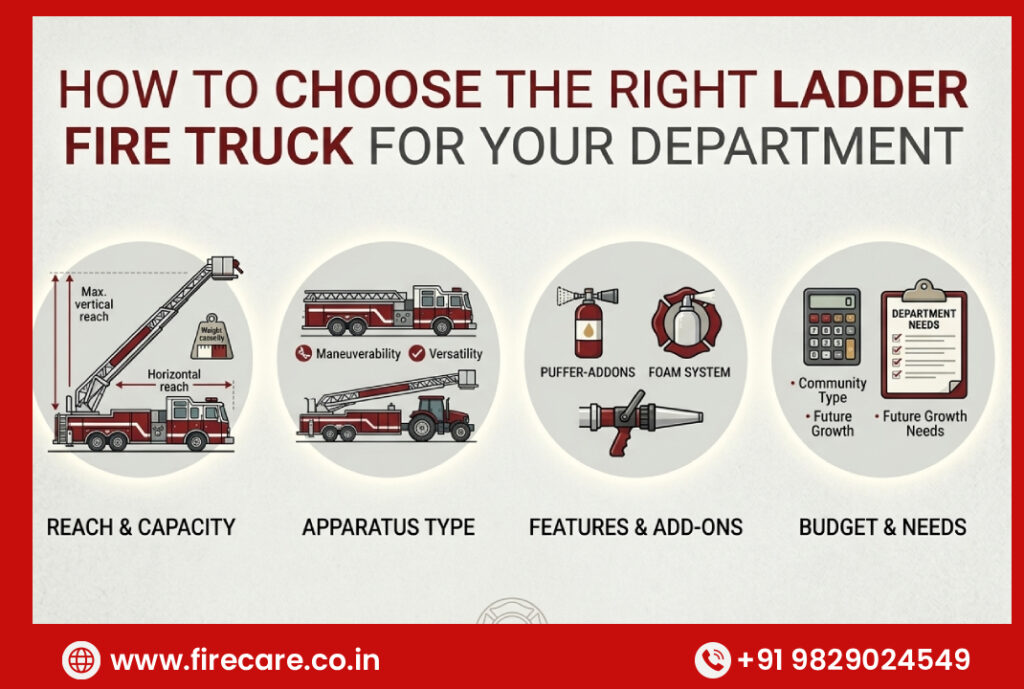
Understanding Different Types of Ladder Fire Trucks
Straight Stick Ladder Trucks
Straight stick ladder trucks are among the most common aerial apparatus in North America. These trucks feature a long telescoping aerial ladder mounted directly on the chassis without a bucket or platform. Departments often choose straight sticks because they are lighter, simpler, and generally less expensive than tower ladders.
One major advantage is speed and reach. Straight stick ladders can often deploy quickly and access elevated positions efficiently. They are excellent for ventilation, elevated master streams, and rescue operations where firefighters need direct aerial access. Many departments prefer straight sticks for suburban and mixed-use districts because they balance maneuverability with operational versatility.
Another benefit is reduced weight. Because there is no platform bucket at the tip, straight stick trucks are usually lighter and easier to maneuver than tower ladders. This can improve performance on narrow roads, older bridges, and crowded neighborhoods. Departments operating in older cities often prioritize these factors when evaluating apparatus.
Still, straight sticks may not be ideal for every operation. Tower ladders offer better elevated work platforms for rescues and prolonged operations. Straight sticks also require firefighters to climb and work directly from the ladder, which may increase fatigue during extended incidents. Departments should evaluate how often they conduct technical rescues, elevated operations, and multi-story evacuations before choosing this type.
Tower Ladder Trucks
Tower ladders include an aerial platform or bucket mounted at the tip of the ladder. This design provides a stable working area for firefighters during rescues, ventilation, and elevated water operations. Tower ladders are especially valuable in urban environments where firefighters may need to operate at height for long periods.
One of the biggest advantages is operational safety. Firefighters can work from the bucket instead of climbing directly on ladder rungs during complex operations. Tower ladders are often preferred for high-rise incidents, technical rescues, and large commercial fires. They can also transport injured victims more safely from upper floors.
Tower ladders also support stronger elevated master stream operations. Their platforms provide stability and flexibility during defensive firefighting scenarios. Departments protecting industrial facilities, warehouses, or high-density residential buildings often see tower ladders as essential assets.
The tradeoff is size, weight, and cost. Tower ladders are usually heavier, more expensive, and more mechanically complex than straight sticks. Maintenance demands may also increase due to hydraulic systems, electronic controls, and bucket equipment. Departments must balance operational benefits against budget realities and maintenance capacity.
Tiller Ladder Trucks
Tiller trucks are unique because they use articulated steering with a second driver controlling the rear wheels. These apparatus are designed for tight urban streets and dense city environments where maneuverability is critical. Despite their long length, tillers can navigate corners and narrow roads better than many traditional aerials.
Departments operating in congested downtown districts often rely on tillers because they combine exceptional maneuverability with large equipment capacity. Many tiller trucks also carry extensive rescue tools, ventilation equipment, and ground ladders. This makes them highly versatile for urban firefighting operations.
There is ongoing debate within the fire service about tiller efficiency compared to modern compact aerial apparatus used internationally. Some argue newer European designs achieve similar ladder heights with smaller vehicles, while others emphasize the superior equipment storage and operational flexibility of tillers. Ultimately, the decision depends on district layout, operational philosophy, and staffing.
Tiller trucks require specialized driver training because they involve coordinated operation between front and rear drivers. Departments considering tillers must evaluate training resources carefully. Without proper training, maneuverability advantages can quickly disappear.
Quint Fire Trucks
Quints combine the functions of a pumper and ladder truck into one apparatus. The term “quint” refers to five primary functions: pump, water tank, hose storage, aerial device, and ground ladders. These trucks are popular with departments seeking versatility while managing limited budgets or staffing.
For smaller departments, quints can reduce fleet size while maintaining operational capability. Instead of purchasing separate engines and ladder trucks, departments may use a single quint to perform multiple functions. Rural and suburban agencies often favor this approach because it maximizes efficiency.
Quints can also improve response flexibility. During smaller incidents, one apparatus may handle pumping, suppression, and aerial access simultaneously. This becomes especially valuable when staffing is limited or response distances are long.
The challenge is operational balance. A quint trying to perform multiple roles at once may create tactical complications. Fireground command must carefully assign priorities to avoid overloading the apparatus or crew. Departments considering quints should evaluate whether their operational model truly supports multi-role deployment.
Assessing Your Department’s Operational Needs
Urban vs Rural Response Requirements
Every fire district presents different operational realities. Urban departments often prioritize maneuverability, vertical reach, and rapid aerial deployment because they operate around traffic congestion, narrow streets, and multi-story structures. Rural departments may prioritize water supply, versatility, and long-distance response capabilities instead.
A department protecting industrial facilities or warehouses may require elevated master stream capacity and high tip loads. A suburban department focused on residential neighborhoods may prioritize compact dimensions and quick setup. Choosing apparatus without considering local risks is like buying hiking boots for a swimming competition. The equipment simply will not match the mission.
Departments should analyze call data from recent years before making decisions. Look at the frequency of structure fires, rescue operations, hazardous materials incidents, and mutual aid responses. Mapping incident locations can reveal whether aerial reach or maneuverability is more important.
ISO ratings and insurance considerations also matter. Some communities benefit from improved insurance ratings when ladder apparatus are added or upgraded. One department recently noted that adding its first ladder truck could improve community safety and potentially reduce homeowner insurance costs. These financial benefits can help justify apparatus investments to local governments and taxpayers.
Building Heights and Community Risks
The buildings within your response district should heavily influence ladder selection. Departments protecting mostly one- and two-story homes may not need 100-foot aerials. Areas with high-rise buildings, industrial facilities, or large apartment complexes often require greater reach and elevated stream capacity.
Community growth trends also matter. A district currently dominated by low-rise buildings may change significantly over the next decade. New warehouses, hotels, hospitals, or residential towers can quickly alter operational requirements. Departments should coordinate with local planning agencies to understand future development projects before purchasing apparatus.
Risk analysis should include more than building height alone. Roof access, setback distances, utility obstructions, bridge limitations, and roadway conditions all impact aerial operations. A long ladder may look impressive on paper but become ineffective if streets prevent proper positioning.
Ground ladder complement is another overlooked factor. Fire service experts increasingly emphasize the importance of carrying extensive ground ladders beyond minimum standards. Departments should evaluate how often they deploy portable ladders during operations and ensure apparatus design supports quick, safe deployment.
Key Features to Look for in a Ladder Fire Truck
Ladder Reach and Working Height
Ladder reach is usually the first specification departments evaluate, but it should never be the only factor. Maximum vertical reach matters, but so does horizontal reach, scrub area, and positioning flexibility. Some buildings require aerial access over setbacks, parking lots, or obstacles. A truck with excellent vertical reach but poor horizontal performance may struggle during real-world operations.
Departments should conduct practical response simulations before purchasing apparatus. Manufacturers often provide demonstration trucks for field evaluations. Use these opportunities to position apparatus around schools, apartment complexes, warehouses, and tight intersections within your district. Real-world testing reveals limitations that brochures cannot show.
Working height also depends on stabilizer placement and road conditions. Some apparatus require extensive outrigger deployment space, limiting operational flexibility in congested areas. Departments should evaluate how quickly trucks can stabilize and operate safely within realistic urban or suburban environments.
Safety technology has become increasingly important as departments prioritize injury reduction. National injury reports show firefighter injuries have declined significantly over the past two decades, partly due to stronger safety practices and equipment improvements. Modern aerial systems with improved stabilization, monitoring, and ergonomic design contribute to this trend.
Pump Capacity and Water Tank Size
Many departments focus heavily on ladder specifications while overlooking pump and water capacity. This can create operational limitations during defensive operations or rural incidents where hydrants are unavailable.
Pump size should match expected operational demand. Urban departments with reliable hydrant systems may prioritize high-capacity pumps for master streams. Rural departments often need larger onboard water tanks because water supply may be delayed during initial operations.
Balancing water capacity with maneuverability is important. Larger tanks increase vehicle weight, which may impact acceleration, braking, and road performance. Departments should avoid overbuilding apparatus beyond realistic operational needs.
Pump panel ergonomics also matter more than many departments realize. Controls should be easy to access, clearly labeled, and functional during stressful conditions. Small usability improvements can significantly improve operational efficiency on the fireground.
Budget Planning and Long-Term Costs
New vs Used Ladder Trucks
Budget limitations force many departments to compare new and used apparatus. Both options have advantages depending on operational needs and financial realities.
New ladder trucks offer customization, modern safety systems, warranty protection, and longer service life. Departments can spec apparatus precisely for district requirements. The downside is obvious: rising costs and lengthy delivery times. Some departments now wait years for delivery while prices continue climbing.
Used apparatus can provide faster deployment and major cost savings. Smaller departments often purchase refurbished aerials to improve capability without overwhelming budgets. One department recently acquired a used ladder truck specifically to improve local safety and reduce reliance on mutual aid.
The key with used apparatus is inspection quality. Departments should conduct detailed evaluations covering ladder integrity, hydraulic systems, maintenance history, corrosion, electronics, and pump performance. A cheap purchase price can quickly become expensive if major repairs emerge later.
Maintenance and Lifecycle Expenses
Lifecycle cost matters more than purchase price alone. Departments sometimes buy apparatus based on initial affordability without considering maintenance over 20 years of service.
Annual aerial inspections, hydraulic repairs, software updates, and replacement parts create ongoing expenses. Proprietary systems may increase long-term repair costs if departments depend heavily on manufacturer-specific components. Some firefighters and apparatus managers have raised concerns about parts pricing and supply limitations in recent years.
Fuel costs, training requirements, insurance, and maintenance staffing should also factor into procurement decisions. A more expensive truck with lower maintenance needs may ultimately cost less over its lifespan compared to a cheaper but unreliable apparatus.
Departments should build multi-year lifecycle budgets before purchasing apparatus. Planning only for acquisition costs creates financial pressure later when maintenance demands increase.
Manufacturer Reputation and Service Support
Delivery Time and Parts Availability
The fire apparatus industry has faced significant supply chain disruption and manufacturing delays in recent years. Departments now report waiting multiple years for apparatus delivery while prices continue increasing. This makes manufacturer reliability more important than ever.
Before choosing a vendor, departments should evaluate historical delivery performance, service availability, and parts distribution networks. Fast emergency repairs become critical when frontline apparatus experience mechanical failures.
Nearby service centers can significantly reduce downtime. A manufacturer offering excellent equipment but limited regional support may create operational problems during emergencies. Departments should also evaluate whether replacement parts are proprietary or widely available.
Speaking with neighboring departments can provide valuable insight into manufacturer performance. Real-world feedback often reveals strengths and weaknesses not visible during sales presentations.
Warranty and Training Programs
Training is one of the most overlooked aspects of apparatus purchasing. Even the best ladder truck becomes ineffective if crews lack confidence and operational familiarity.
Manufacturers offering extensive training programs provide major long-term value. Departments should ask about driver training, aerial operations, maintenance education, and software instruction before finalizing purchases.
Warranty terms also deserve careful attention. Some warranties exclude critical components or require strict maintenance schedules. Departments should review coverage carefully to avoid expensive surprises later.
Strong manufacturer partnerships often continue long after delivery. The best vendors support departments with updates, technical assistance, and operational guidance throughout the apparatus lifecycle.
Future Trends in Ladder Fire Trucks
Electric and Hybrid Fire Apparatus
Electric and hybrid fire trucks are slowly entering the market as departments explore cleaner and quieter response options. Adoption remains limited compared to other emergency vehicles, but interest continues growing globally.
Electric aerial apparatus offer potential advantages including lower emissions, quieter operation, and reduced fuel costs. Some departments also appreciate the reduced engine noise during nighttime responses and scene operations.
Challenges still exist. Battery range, charging infrastructure, acquisition cost, and long-term reliability remain major concerns. Departments considering electric apparatus should carefully evaluate local climate, response patterns, and infrastructure capacity before investing.
Hybrid systems may provide a more practical transition path for many departments. These systems combine traditional diesel reliability with improved energy efficiency and operational flexibility.
Smart Safety Systems and Automation
Modern ladder trucks increasingly include advanced safety and automation features. These systems help reduce operator error, improve stabilization, and enhance firefighter safety during operations.
Examples include:
- Automatic stabilization monitoring
- Collision avoidance systems
- Integrated aerial cameras
- Wireless aerial controls
- Smart diagnostics and maintenance alerts
- Improved ergonomic ladder designs
These technologies are becoming increasingly valuable as departments focus on reducing firefighter injuries and improving operational efficiency. National injury trends suggest that stronger safety practices and modern equipment are helping reduce injuries across the fire service.
Departments purchasing apparatus today should think beyond current operations. Technology will continue evolving throughout the truck’s service life, so choosing adaptable and upgrade-friendly systems is important.
Conclusion
Choosing the right ladder fire truck is one of the most important operational decisions a fire department can make. The ideal apparatus is not necessarily the biggest, most expensive, or most advanced truck on the market. It is the truck that best matches your district risks, staffing realities, response patterns, budget, and long-term goals.
Departments should approach apparatus purchasing with a strategic mindset. Analyze call data, evaluate future growth, involve frontline firefighters, compare lifecycle costs, and test apparatus under realistic conditions. Avoid purchasing based solely on tradition, appearance, or sales pressure.
The fire service continues evolving rapidly. Rising apparatus costs, staffing challenges, technological advancements, and changing community risks all influence modern procurement decisions. Departments that plan carefully today will build safer, stronger, and more effective operations for years to come.
Frequently Asked Question (FAQs)
1. What is the difference between a tower ladder and a straight stick ladder truck?
A straight stick ladder truck uses a telescoping aerial ladder without a platform bucket, while a tower ladder includes a bucket or platform at the tip. Tower ladders provide better elevated work areas and rescue capabilities, while straight sticks are usually lighter and more maneuverable.
2. How long does a ladder fire truck typically last?
Most ladder trucks serve approximately 15 years in frontline service and may remain in reserve service for several additional years depending on maintenance and operational conditions.
3. Are used ladder trucks a good investment?
Used ladder trucks can be excellent investments for departments with limited budgets if they are properly inspected and refurbished. Departments should carefully review maintenance history, structural condition, hydraulic systems, and aerial certifications before purchasing.
4. How much does a new ladder fire truck cost today?
Modern ladder trucks can cost more than $2 million depending on configuration, technology, and aerial type. Prices have risen sharply in recent years due to supply chain issues and industry consolidation.
5. What should departments prioritize when buying a ladder truck?
Departments should prioritize operational fit over appearance or brand loyalty. Key considerations include ladder reach, maneuverability, staffing compatibility, maintenance support, safety systems, lifecycle cost, and future community growth.
You may also check this: The Ultimate Guide to American Fire Engine Features and Specifications